Particulate Matter Testing
Gillson Sciences provides particulate matter testing to detect visible and subvisible particles that can affect product safety, quality, and regulatory compliance in life sciences manufacturing. Every test we perform is designed to safeguard your products and the patients who rely on them — and our particulate matter testing services often work alongside analytical testing and material characterization to support comprehensive product quality programs.
Particulate Matter Testing Capabilities
Our particulate matter testing capabilities include a range of validated methods designed to detect, quantify, and characterize visible and subvisible particles to support product quality and regulatory compliance.
We offer a complete range of particulate matter testing services including:
- USP <729> Globule Size Distribution in Lipid Injectable Emulsions
- USP <787> Subvisible Particulate Matter in Therapeutic Protein Injections
- USP <788> Particulate Matter in Injections. Method I, Light Obscuration, and Method II, Microscopic Particle Count Test
- USP <789> Particulate Matter in Ophthalmic Solutions. Light Obscuration and Microscopic Particle Count Test
- ISO 8871-3 Elastomeric Parts for Parenterals and for Devices for Pharmaceutical Use
- ISO 8536 Infusion Equipment for Medical Use
- ISO 14708 Implants for Surgery. Active implantable medical devices
- BS EN 45502-2-1:2003 Active implantable medical devices Particular requirements for active in plantable medical devices intended to treat bradyarrhythmia (cardiac pacemakers)
- ASTM International Testing Procedures
- Continuous Training – Ongoing training for all our employees ensures that our employees maintain an in-depth knowledge of cGMP requirements, current compendial requirements (USP/EP/JP/BP/ASTM/ISO), and internal SOPs.
- Additional methods as required by regional or product-specific regulations
Particle Counting
At Gillson Sciences, we apply advanced particle counting technologies to deliver accurate, reproducible data for product quality, compliance, and research. Our capabilities include Light Obscuration and Light Scattering, Optical Microscopy, and Flow Imaging, each offering unique advantages depending on the material, particle characteristics, and regulatory requirements.
Ideal for high-throughput, precise size distribution analysis in liquids.Light obscuration and light scattering are precise analytical methods for measuring and sizing particles in liquid suspensions.
As particles pass between a laser light source and a detector, they block or scatter light. The detector measures the change in light intensity and processes the data to determine particle quantity and size distribution.
Our volumetric liquid particle counters analyze the entire liquid stream, measuring particles from 0.2 μm to 1,000 μm in up to 1,024 size channels, providing detailed and reliable results.
Best for visual identification, morphology assessment, and differentiating particle types.
Optical microscopy involves visually examining particulate matter collected on a filtration membrane to identify and quantify individual particles.
This method offers direct observation of particle size, shape, and distribution at working ranges starting from 5 μm and larger. It is especially useful for differentiating particle types and evaluating surface morphology.
Recommended for detailed shape analysis, biologics, and protein-based formulations.
Flow imaging uses digital imaging technology to measure particles in a moving fluid stream. This method provides precise analysis of size, morphology, shape characteristics, grayscale or color attributes, and statistical population distribution.
With a working range starting from 2 μm, flow imaging is particularly effective for analyzing biologics and protein-based products. High-resolution images capture detailed particle features, ensuring accurate classification and dependable results.
Particle Size Distribution
At Gillson Sciences, we offer multiple particle sizing techniques to meet the diverse needs of our clients. Whether working with nanoparticles or larger particulates, our methods deliver accurate, reproducible measurements for research, quality control, and regulatory compliance.
Nano Tracking Analysis (NTA)
Nano Tracking Analysis is used to visualize and measure nanoparticles in liquid suspensions. A laser illuminates the particles, and the scattered light is captured by a microscope and recorded in real time. By tracking the Brownian motion of individual particles and applying the Stokes-Einstein equation, NTA calculates sizes from 50 nm to 2 μm. This method is ideal for high-resolution visualization of particle populations in biologics, pharmaceuticals, and nanomaterials.
Laser Diffraction Spectroscopy
Laser diffraction measures particle size distribution by passing a laser beam through a sample and analyzing how light scatters. Larger particles scatter light at small angles, while smaller particles scatter at wider angles. Using Mie theory, we can determine sizes ranging from 20 nm to 2 mm. This method is well-suited for powders, suspensions, and emulsions, offering fast, accurate results across a wide size range.
Dynamic Light Scattering (DLS)
Dynamic Light Scattering, also known as photon correlation spectroscopy (PCS) or quasi-elastic light scattering (QLS), measures the Brownian motion of particles in a liquid. Fluctuations in scattered light intensity are analyzed with the Stokes-Einstein equation to calculate particle sizes from 10 nm to 2 μm. DLS is highly effective for characterizing nanoparticles, proteins, and colloidal systems.
Additional Services
Feasibility Evaluation Testing & Method Development
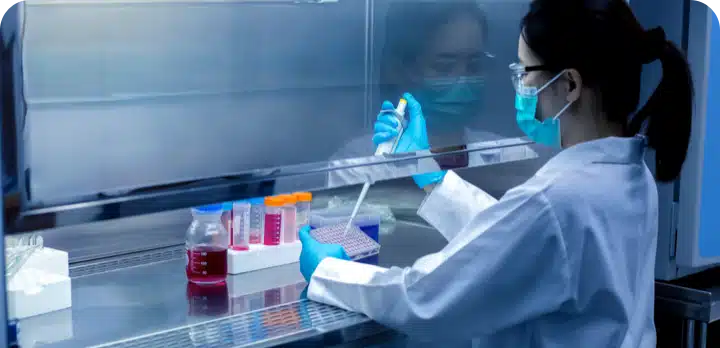
Gain critical insights in early product development with advanced feasibility testing that identifies risks like particulate matter, extractable, and aggregation.

Method Validation
We design validation protocols aligned with global standards, leveraging broad expertise and comparative insights to deliver optimal, compliant testing for your application.
Method Transfer or Verification
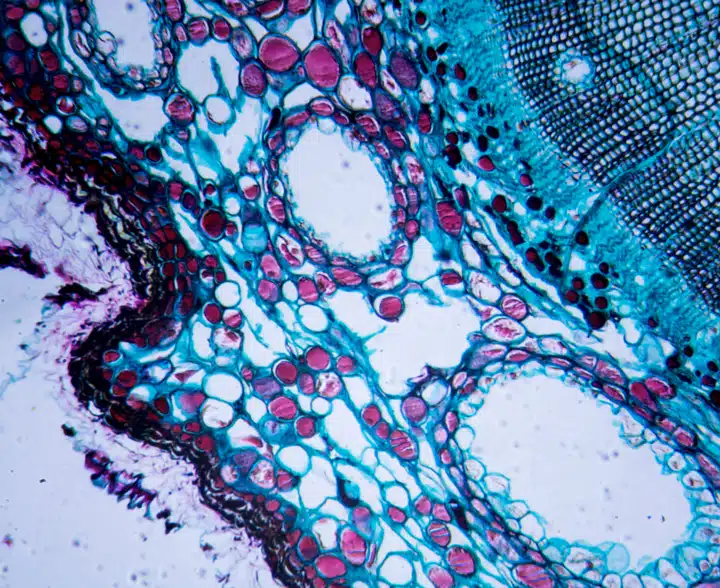
We ensure smooth, reliable method transfers by addressing system, environment, and workflow differences, backed by decades of expertise and participation in reference studies.
Frequently Asked Questions
Particulate matter testing evaluates injectable and ophthalmic drug products for the presence of visible and subvisible foreign particles. It is a critical regulatory requirement to ensure patient safety, with methods defined under USP <788>, <789>, and related compendial standards.
Visible particles are those detectable by the unaided eye, typically larger than 100 μm. Subvisible particles range from 2 μm to 100 μm and require instrumented methods such as light obscuration, flow imaging, or optical microscopy to detect and quantify.
Gillson Sciences performs USP <787>, <788>, <789>, and <729>, as well as ISO 8871, ISO 8536, ISO 14708, and ASTM procedures. We also offer NTA, Laser Diffraction, and Dynamic Light Scattering for particle size distribution analysis.
Flow imaging is recommended for biologics, protein-based formulations, and samples where particle morphology or shape classification is important. Light obscuration is preferred for high-throughput size distribution analysis in standard liquid formulations.

Get in Touch
We're here to answer your questions, discuss your project needs, or provide a custom quote. Fill out the form below and our team will respond promptly.