Chemical Analysis
No matter the size of your project or operation, Gillson Sciences’ GxP-qualified experts deliver microbiological analysis at every stage of the life sciences, healthcare, and medical device continuum.
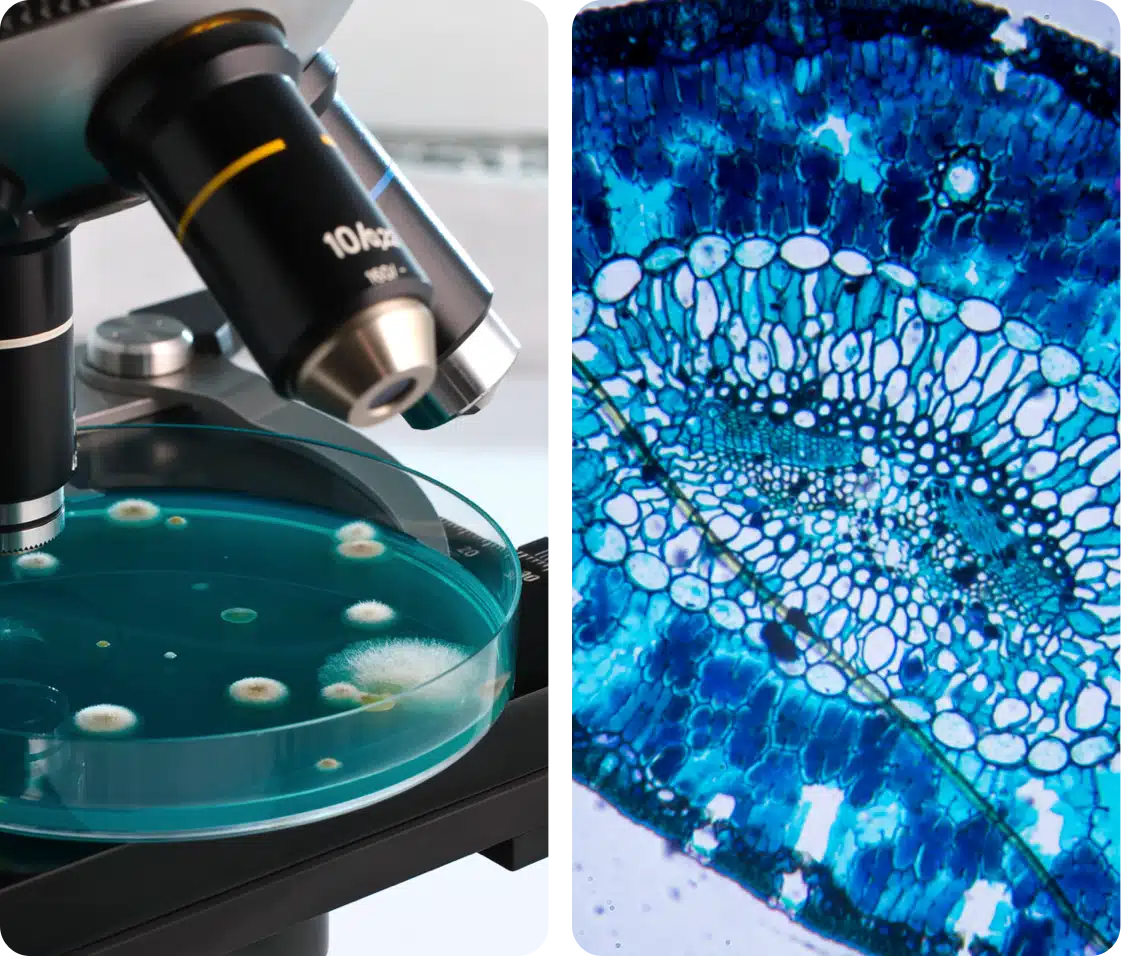
Where Discovery Meets Precision
From onsite testing to simple “swab and ship,” options, we manage the entire process starting with coordinating logistics to delivering precise, timely, and reliable results. Our goal is to provide actionable data that safeguards products, supports compliance, and keeps your operations running smoothly.
- Microbial Limit TestingUSP <61>USP <62>
- Sterility TestingUSP <71>
- Bacterial Endotoxin TestingBETUSP <85>
- Antimicrobial Effectiveness TestingAETUSP <51>
- Microbial Identification
Learn more
Testing Capabilities
This includes:
Microbial Limit Testing (USP <61>, USP <62>)
Sterility Testing (USP <71>)
Bacterial Endotoxin Testing (BET, USP <85>)
Antimicrobial Effectiveness Testing (AET, USP <51>)
Microbial Identification
AET evaluates a product’s ability to reduce microbial populations over time when challenged with specific organisms. Testing can be performed on a range of products, including injections, parenterals, topicals, orals, antacids, and transdermals, and may include facility resident organisms. A neutralization study confirms that the selected diluent effectively neutralizes antimicrobial components. Formats include:
AET Individual Organism – USP <51>, CTFA M3/M4, EUPh 2.1.1, ISO 11930:2012
AET Mixed Organisms – CTFA M3/M4
AET Product Neutralization – CTFA/USP
BET quantifies bacterial endotoxins in products using kinetic chromogenic methodology, with sensitivity to 0.005 EU/mL. Testing applies to product samples, water samples, and recovery tests when method manipulation is required. Method validation requires three product lots. Special considerations apply to samples that are opaque, highly colored, outside pH 6–8, contain polypropylene or cells, or are packaged in polypropylene. Low endotoxin vials are available for purchase for sample submission.
B&F Testing verifies that products requiring USP <71> Sterility Testing do not inhibit microbial growth, ensuring accurate sterility test results and preventing false negatives.
Bioburden testing measures the total number of viable microorganisms present on a medical device or other product. Performed after manufacturing and before sterilization, this testing determines the microbial load and helps assess the sterility assurance level required for effective sterilization. A significant increase in microbial load can impact the success of sterilization processes.
Our testing follows ANSI/AAMI/ISO Guideline 11737-1, Sterilization of Medical Devices – Microbiological Methods, Part 1: Determination of a Population of Microorganisms on Products, and includes:
Bioburden Validation Testing – Exhaustive Recovery Method
Bioburden Validation Testing – Product Inoculation Method
Bioburden Validation Testing – Bacteriostasis and Fungistasis Testing
BIs are used to monitor the effectiveness of sterilization and decontamination processes. Our capabilities include:
Population Reduction – Log Reduction Analysis
Population Reduction – Positive/Negative (Go/No-Go)
Direct Transfer – Strips, carriers, and ampoules
Population Verification
Aseptic media fill studies are essential for validating aseptic manufacturing processes, and requirements can vary across global markets. Gillson Sciences tests aseptic media fill samples in accordance with a range of compendial guidelines, providing sterility confirmation and growth promotion testing to ensure your processes meet regulatory standards.
U.S. Pharmacopeia standards require documented proof that facility disinfectants are effective. This includes demonstrating that cleaning agents work on the hard surfaces within your facility and against resident microorganisms. Gillson Sciences provides microbial cleaning validation services to help you meet these stringent regulatory requirements with confidence.
Microbial content testing, also known as microbial limit or bioburden testing,evaluates cosmetic products for microbial contamination. Preparatory testing is performed to ensure results are valid and reliable. Testing for drug products and raw materials follows USP <61> and USP <62>, while medical devices are assessed according to AAMI bioburden testing guidelines. Sterile drug products are tested per USP <71>.
We perform:
CTFA M1 – Quantitative testing to determine total microbial plate count
CTFA M2 – Qualitative testing for specified organisms, with evaluation of any recovered organisms for potential safety or product stability concerns
Accurate microbial identification is crucial for controlling contamination, ensuring product quality, and meeting regulatory compliance requirements. Gillson Sciences offers advanced techniques to meet a wide range of testing needs.
MALDI-TOF Mass Spectrometry – state-of-the-art technology that analyzes the unique protein “fingerprints” of microorganisms, providing highly accurate species-level identifications within minutes. This rapid, reliable method supports GMP, ISO, and FDA-regulated environments.
Benefits: Same-day turnaround, industry-leading accuracy, cost savings over biochemical assays.
Applications: Environmental monitoring isolates, raw materials and in-process testing, sterility investigations, product release testing, contamination events.
Bacteria & Yeast – Sherlock E-FAME™ (acid-catalyzed GC-FAME extraction and analysis) optimized for aerobic bacteria relevant to pharmaceutical quality control, including all USP <61>/<62> strains, as well as biochemical methods.
Mold – Macroscopic and microscopic morphological analysis for precise characterization.
Also known as microbial content or bioburden testing, microbial limit testing evaluates non-sterile pharmaceutical products, nutritional supplements, and dietary supplements for microbial content. Sterile products are tested separately under USP <71> Sterility Test guidelines.
Preparatory testing is performed to ensure the accuracy and reliability of results.
USP <61> and USP <2021> – Quantitative tests to determine total aerobic microbial count and total combined yeast/mold count.
USP <62> and USP <2022> – Qualitative tests for specified organisms that may be present. Any organisms recovered should be assessed for potential impact on user safety and product stability.
Clients may refer to USP <1111> or USP <2023> for guidance in selecting the appropriate tests for their product.
We prepare and store USP reference microorganisms and facility-resident flora for use in required manufacturing studies. Our capabilities include producing frozen microbial cultures to support drug product testing and validation.
Tests include:
Water Systems
Environmental Monitoring
Autoclave Qualifications & Biological Indicator Analysis
Aseptic Media Fill
Cleaning Validation/Verification
Calibration Services
Qualification Services
Sterility testing is performed on substances, preparations, or articles that must be sterile. Common methods include:
Direct Transfer – Product immersion or direct inoculation
Flush Method
Filtration (preferred method)
As part of sterility validation, Bacteriostasis and Fungistasis (B&F Testing)—also called a preparatory test—is conducted to confirm that the product and chosen method can recover a low number of microorganisms and that the item does not inhibit microbial growth.
Water is a critical raw material and ingredient in product manufacturing, used in both processing and formulation. Gillson Sciences offers water testing services in compliance with USP, EUPh, CTFA, and JP requirements, including:
Total Organic Carbon Testing (TOC) – USP <643>, JP, EUPh
Bacterial Endotoxin Testing (BET) – USP <85>
Hemodialysis Water Testing
Heterotrophic Plate Count
Screening for Fluorescent Pseudomonas Group and Coliforms
Nitrate Testing – EUPh
Conductivity – USP <645> Stage I, II, III
Resistivity
pH
Recovery Efficiency Testing is performed on the first microbial sample. Water testing supplies are available from Gillson Sciences.
Get in Touch
We’re here to answer your questions, discuss your project needs, or provide a custom quote. Fill out the form below and our team will respond promptly.
Additional Services
Nano Tracking Analysis (NTA)
Nano Tracking Analysis is used to visualize and measure nanoparticles in liquid suspensions. A laser illuminates the particles, and the scattered light is captured by a microscope and recorded in real time. By tracking the Brownian motion of individual particles and applying the Stokes-Einstein equation, NTA calculates sizes from 50 nm to 2 μm. This method is ideal for high-resolution visualization of particle populations in biologics, pharmaceuticals, and nanomaterials.
Laser Diffraction Spectroscopy
Nano Tracking Analysis is used to visualize and measure nanoparticles in liquid suspensions. A laser illuminates the particles, and the scattered light is captured by a microscope and recorded in real time. By tracking the Brownian motion of individual particles and applying the Stokes-Einstein equation, NTA calculates sizes from 50 nm to 2 μm. This method is ideal for high-resolution visualization of particle populations in biologics, pharmaceuticals, and nanomaterials.
Dynamic Light Scattering (DLS)
Nano Tracking Analysis is used to visualize and measure nanoparticles in liquid suspensions. A laser illuminates the particles, and the scattered light is captured by a microscope and recorded in real time. By tracking the Brownian motion of individual particles and applying the Stokes-Einstein equation, NTA calculates sizes from 50 nm to 2 μm. This method is ideal for high-resolution visualization of particle populations in biologics, pharmaceuticals, and nanomaterials.
Additional Services
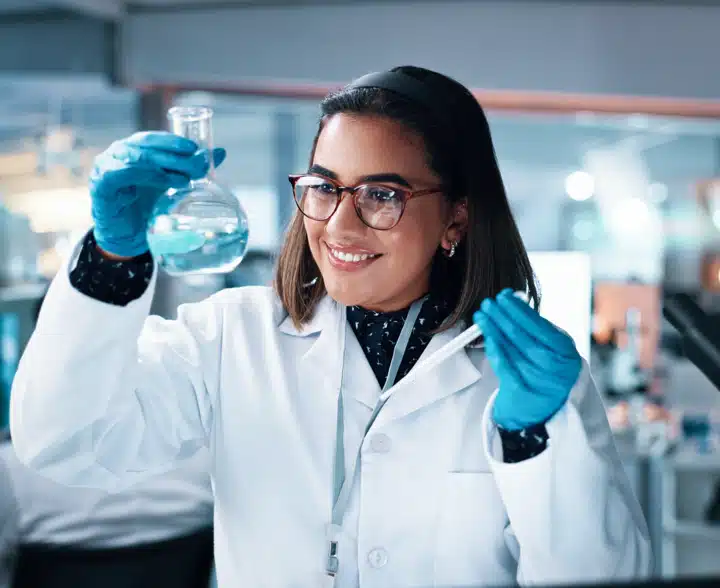
Feasibility Evaluation Testing & Method Development
Gain critical insights in early product development with advanced feasibility testing that identifies risks like particulate matter, extractables, and aggregation.
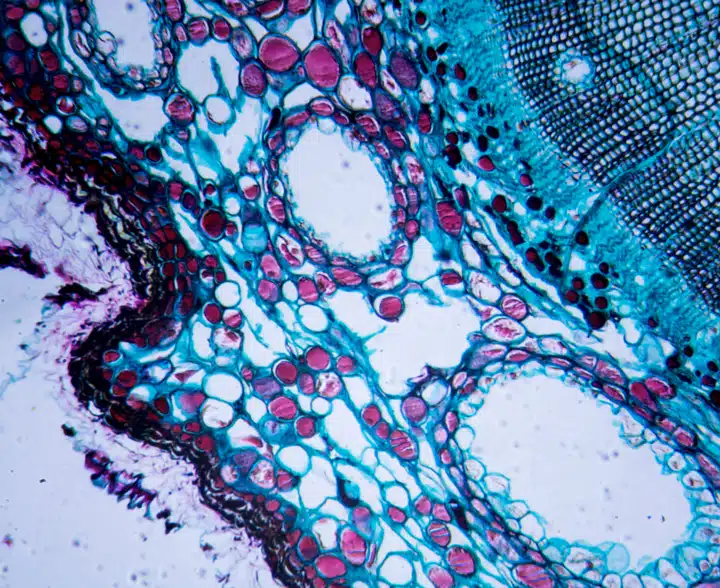
Method Validation
Gain critical insights in early product development with advanced feasibility testing that identifies risks like particulate matter, extractables, and aggregation.
Visual Standards Card
Gain critical insights in early product development with advanced feasibility testing that identifies risks like particulate matter, extractables, and aggregation.

asxas
asxasxas
test
wrew
werew
wer
werew
werewr
werewr
wrew
werwer
43r34
4r34r
34r34r34